The Underground Stope Optimiser — Mineable Shape Optimisation From the Block Model
The underground analogue of pit optimisation: IMC’s Mineable Shape Optimiser finds the optimal set of stope shapes from a block model under mining-method and design constraints, feeding RPEEE, scheduling, cost and the financial model.
Open-pit value starts with the pit shell; underground value starts with the mineable shape. IMC’s stope optimiser is the underground analogue of pseudo-flow pit optimisation: from a valued block model it generates and selects the optimal portfolio of stope shapes, subject to the geometry of the chosen mining method and the project’s economic and design constraints, then carries those shapes through the same integrated chain to RPEEE, scheduling, cost and corporate NPV.
Start with the right mining method
Underground value is decided long before the schedule — at method selection. A narrow, steeply dipping vein, a broad disseminated zone and a flat-lying tabular body each demand a different method, and the optimiser is built around that choice. Each method is a configurable template defining the shape envelope, sublevel geometry and pillar rules:
| Method | Typical setting |
|---|---|
| Sublevel Open Stoping | Steeply dipping, competent orebodies |
| Longhole Stoping | Narrow-to-moderate steeply dipping veins |
| Sublevel Caving (SLC) | Large, steeply dipping massive orebodies |
| Cut & Fill | Irregular or higher-grade orebodies needing selectivity |
| Shrinkage Stoping | Narrow, steeply dipping veins in competent rock |
| Room & Pillar | Flat-lying, tabular deposits |
Because each method is a template, the geology team and engineers can test which method suits the orebody — running the same block model through different methods and comparing the recoverable shapes, tonnes, grade and value — rather than committing to one method on assumption.
How the optimiser works
- Candidate generation — the optimiser scans the regularised block model and generates a large population of candidate stope shapes within the method’s geometry envelope: strike length, mining width and height (sublevel interval) are stepped between configurable minimum and maximum limits, positioned on defined sublevel intervals.
- Optimisation mode — a fast rectangular floating-stope scan (prism), or prism-seeded shape annealing with wall-angle control for tighter, more realistic shapes (an approach comparable to a published mineable-shape-optimiser method).
- Dilution & recovery — hanging-wall and footwall dilution skins are applied to each candidate, and mining recovery is accounted for, so reported tonnes and grade are diluted, mineable figures — not in-situ optimism.
- Selection — the optimiser selects the best non-overlapping portfolio of stopes that honours pillar rules and the cut-off, maximising recovered value.
- Result — a final portfolio of mineable shapes with diluted tonnes, grade, dilution and value per stope, ready for envelope generation, scheduling and costing.

The three optimisation modes, left to right — Prism: rectangular floating stopes (fast); Slice: prism-seeded shape annealing with wall-angle control; Native (MSO): per-section seed slices, ILP + anneal. From the MiningIQ stope optimiser.
Selective vs box mining
There are two ways to take the material in a stope. In selective mode the stope conforms to the ore: only the ore blocks inside the optimiser box are mined, waste pockets inside the box are left in the ground, and wall dilution comes from a hanging-wall / footwall skin. In box mining mode the stope is the box: everything inside it is mined — ore plus waste, the waste diluting at its true grade. Selective suits cut-and-fill, narrow-vein, tabular open stoping and shrinkage; box mining suits bulk methods.
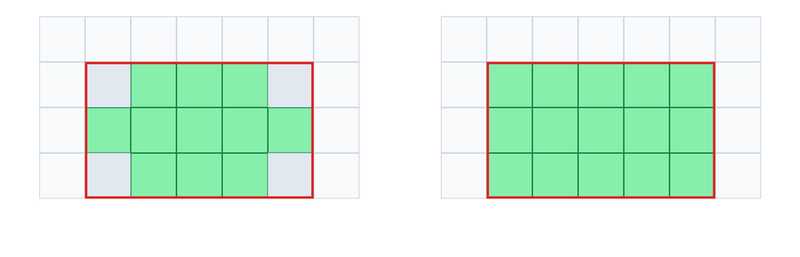
Selective (left) mines only the ore inside the optimiser box (red outline) and leaves the waste pockets; box mining (right) takes the whole box. From the MiningIQ stope optimiser.
Constraints that make the shapes real
The optimiser works to the constraints that determine whether a shape can actually be mined: minimum and maximum stope dimensions, sublevel interval and first-sublevel RL, hanging-wall/footwall dilution offsets, mining recovery, cut-off (including multi-element cut-offs), domain and resource-category filters, and maximum depth below surface. Pillar rules are applied per method. The output is a set of shapes a mining engineer would recognise as buildable, not a cloud of economically attractive voxels.
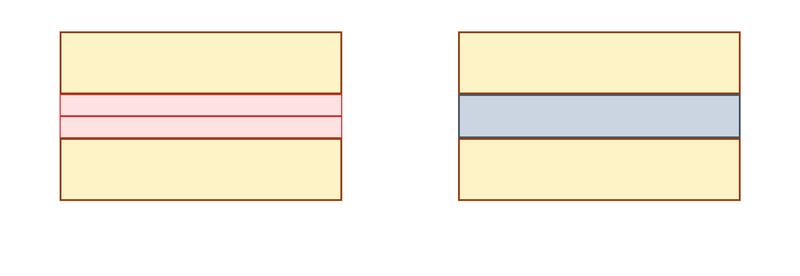
How adjacent stopes are separated — a hanging-wall / footwall dilution skin (left) is mined into the mill feed (more tonnes, slightly lower grade), or an endwall pillar (right) is left in place (ore-only feed, but ore left in the ground). From the MiningIQ stope optimiser.
Part of one integrated chain
The selected stopes feed straight into the rest of the platform: the Aggregate Mineable Envelope for RPEEE resource reporting (Defensible RPEEE), the schedule, the zero-based MineCost model and the enterprise financial model — the same unbroken, auditable spine IMC applies open-pit (From Block Model to Corporate NPV), with the same full client visibility and self-service access (The Total Study Platform).
Backed by best-fit underground specialists — not a captive bench
Underground studies live and die on specialist disciplines — rock mechanics and ground support, geotechnical and stope-stability design, caveability, ventilation, paste and backfill, and hydrogeology. Rather than staff these from a captive in-house bench (where the best people are often committed elsewhere), IMC hand-picks the best-fit specialists for your mining method and jurisdiction — including the leading local, in-country experts — and integrates their inputs directly into the optimiser, the schedule, the cost model and the financial model, under one accountable signatory with named Key Personnel. (See The Sovereign Consultant Model.)
Frequently Asked Questions
Who does the underground geotechnical and specialist work?
IMC hand-picks the best-fit specialists — rock mechanics, ground support, geotechnical/stope stability, ventilation, paste and backfill, and hydrogeology — for your method and jurisdiction, including leading local experts, integrated under one accountable signatory rather than a captive in-house bench.
What is a stope (mineable shape) optimiser?
It is the underground equivalent of pit optimisation — it generates and selects the optimal set of mineable stope shapes in a block model under economic, geometric and mining-method constraints.
Which mining methods are supported?
Sublevel open stoping, longhole stoping, sublevel caving (SLC), cut and fill, shrinkage stoping and room and pillar — each a configurable geometry template, so you can also test which method best suits the orebody.
Does it account for dilution and recovery?
Yes. Hanging-wall and footwall dilution skins and mining recovery are applied to every candidate, so the reported tonnes and grade are diluted, mineable figures.
How does it connect to RPEEE and the financial model?
The selected stopes build the aggregate mineable envelope for RPEEE, and feed scheduling, zero-based costing and the enterprise financial model through the same integrated chain.
Is this the same as stope optimization or mineable shape optimization?
Yes. IMC’s Underground Stope Optimiser performs mineable shape optimisation / optimization from a block model — a stope optimizer / mineable shape optimizer that generates and selects practical stope shapes under mining-method, dilution, recovery and design constraints. (We use Australian spelling “optimisation”; the US spelling “optimization” means the same thing.)