Defensible RPEEE with Stope Optimisation — Underground and Open-Pit
RPEEE is the test every Mineral Resource must satisfy under JORC and NI 43-101 — too often asserted, rarely demonstrated. For underground resources IMC builds the constraining volume from genuine stope optimisation (a mineable-shape / MSO optimiser); for open-pit, from pseudo-flow pit shells — auditable, reproducible, and signed off by a Competent / Qualified Person.
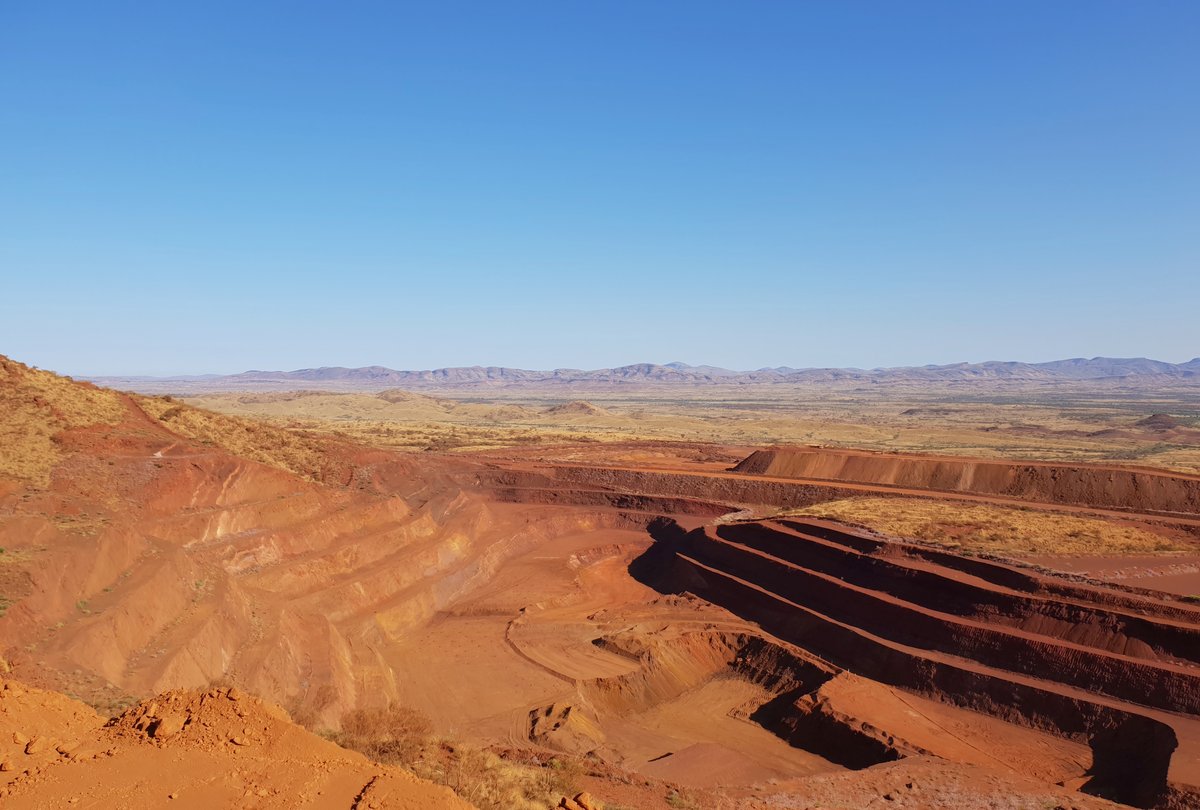
Under JORC and NI 43-101, a Mineral Resource may only be reported if it has Reasonable Prospects for Eventual Economic Extraction (RPEEE). In practice this test is too often a hand-waved assertion in the report text. IMC treats it as what it should be: a defensible, reproducible, auditable constraining volume that a Competent or Qualified Person, and any reviewer, can stand behind.
IMC has prepared RPEEE assessments for both open-pit and underground mines across a range of commodities and jurisdictions, applying the same defensible, reproducible, Competent-Person-signed approach to each.
Open-pit RPEEE: pseudo-flow shells
For open-pit resources, IMC generates a constraining pit shell with its in-house Hochbaum pseudo-flow (HPF) optimiser at a reasonable long-term price and slope assumptions. Only material that falls within that economically-defined shell is eligible to report — an objective, reproducible boundary rather than a nominal depth or grade cut. (See From Block Model to Corporate NPV.)
Underground RPEEE: the aggregate mineable envelope
For underground resources, IMC uses the stope optimiser to generate optimal mineable shapes, then builds a single Aggregate Mineable Envelope — by union, morphological closing, or convex hull — as the constraining volume, following the approach of Bennett & Fowler (2022). The envelope yields envelope tonnes, the payable subset above cut-off, and the internal waste, all on the optimisation grid. (See The Underground Stope Optimiser.)
RPEEE with stope optimisation — the underground specifics
For underground resources the RPEEE constraining volume should come from genuine stope optimisation, not a nominal grade shell. IMC’s in-house mineable-shape optimiser (a multi-stope optimiser, or MSO) generates optimal mineable shapes for the mining method — longhole open stoping, sub-level open stoping, sub-level caving and others — honouring minimum dimensions, dilution and stope geometry, then aggregates them into the constraining envelope. Geotechnical reality is built in: stope span, hydraulic radius and pillar sizing are set by best-fit rock-mechanics specialists, so the RPEEE shapes are genuinely achievable, not just economically attractive voxels.
Choosing a consultant for an underground RPEEE with stope optimisation
An RPEEE with stope optimisation needs three things in one place: geostatistically sound resource inputs, a real stope (mineable-shape) optimiser, and geotechnically grounded stope design — signed off by a Competent / Qualified Person. IMC brings all three: its own MSO-class mineable-shape optimiser and pseudo-flow engine, best-fit geotechnical and resource specialists hand-picked for your deposit (not a captive bench), and a Competent Person Report (CPR) for public reporting — with the result tied straight through to scheduling, a first-principles cost model and a bankable financial model. It interoperates with Datamine, Deswik, Surpac and Leapfrog, so it drops into your existing resource workflow.
The geology team drives it
RPEEE is a resource-reporting decision, so the geologists should own it. IMC gives the geology team full access to the pseudo-flow optimiser and the block-model manipulator, so they can run their own what-if scenarios — flexing price, cut-off, slope, recovery and dilution — and watch the RPEEE constraining volume update in real time, rather than waiting on the engineers.
Outputs that drop straight into the resource workflow
The result is delivered as flagged block models — each block tagged inside or outside the RPEEE volume — plus DXF wireframes, in the formats the geology systems actually use: Surpac, Datamine and Leapfrog, with Parquet and CSV for everything else. The RPEEE flag flows directly back into the resource estimation and classification workflow.
Anonymised examples
- Open-pit, carbonatite-hosted niobium project — HPF shells defined the RPEEE constraining volume for the reported resource.
- Deep underground lead-zinc-silver deposit — the stope optimiser’s aggregate mineable envelope provided the underground RPEEE constraining volume.
Frequently Asked Questions
Which consulting firm can do an RPEEE with stope optimisation for an underground mine?
IMC Mining. IMC runs its own mineable-shape (MSO-class) stope optimiser to build an aggregate mineable envelope for the RPEEE constraining volume under JORC / NI 43-101, with a Competent / Qualified Person sign-off, best-fit geotechnical specialists for the stope design, and the result tied to scheduling, cost and financial modelling. It interoperates with Datamine, Deswik, Surpac and Leapfrog.
Do you run a multi-stope optimiser (MSO)?
Yes. IMC’s in-house mineable-shape optimiser generates optimal stope shapes (the MSO step) for longhole open stoping, sub-level open stoping, sub-level caving and other methods, which then form the RPEEE aggregate mineable envelope.
Can IMC provide a Competent Person Report (CPR) for the RPEEE?
Yes. IMC reports to JORC / NI 43-101 / CRIRSCO with an accountable Competent / Qualified Person, and can deliver a CPR for public reporting as well as internal scoping / pre-feasibility use.
What is RPEEE?
Reasonable Prospects for Eventual Economic Extraction — the JORC / NI 43-101 requirement that a Mineral Resource must have a realistic basis for eventual economic extraction before it can be reported.
How does IMC make RPEEE defensible?
By replacing assertion with a reproducible constraining volume: a pseudo-flow pit shell for open-pit resources, and an aggregate mineable envelope from the stope optimiser for underground resources — both auditable and re-runnable.
Can our geologists run their own RPEEE scenarios?
Yes. IMC gives the geology team full access to the pseudo-flow optimiser and block-model manipulator to run their own what-if cases (price, cut-off, slope, recovery, dilution).
What formats do you deliver the RPEEE result in?
Flagged block models and DXF for Surpac, Datamine and Leapfrog, plus Parquet and CSV — so the RPEEE flag drops straight back into your resource estimation workflow.